Dancing with Fireflies

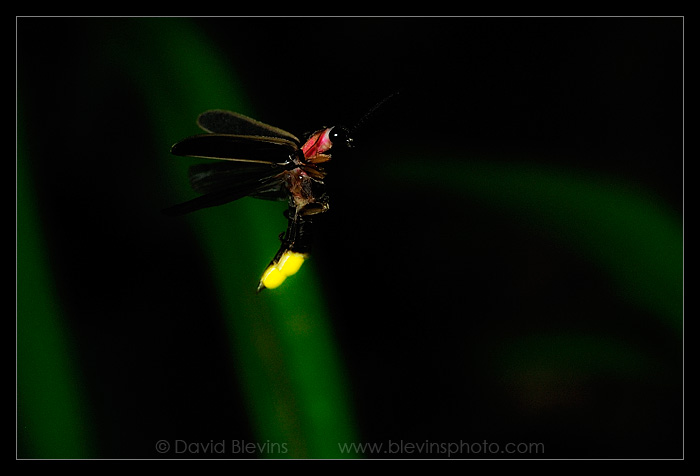
Common Eastern Firefly (Photinus pyralis)

Common Eastern Firefly

This week I worked out a method for making a close-up photograph of a firefly in flight, at night, with its lantern lit. It is an almost impossible photograph to make, but that’s why it was so fun. This is the story of how I did it.

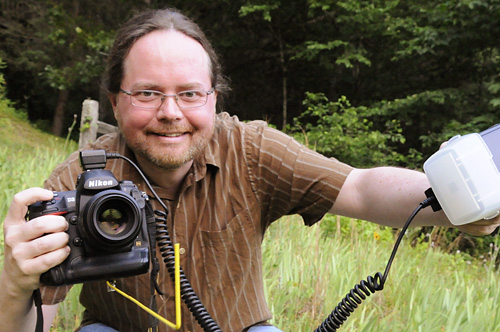
The first problem I had to solve was how to get the firefly in the frame and in focus. They are impossible to see through the viewfinder and shooting from the hip is just not accurate enough for the narrow angle of view of a macro lens. Autofocus is also out of the question because there is not enough light for the autofocus sensor and the subject is too small and fast for autofocus even in daylight. So I invented the Blevins Firefly Pointing Device (patent pending) to make shooting from the hip more possible. It is a wire coat hanger bent into a loop at one end that is attached to the camera tripod mount and bent into a right angle at the other end that points toward the center of the composition (but positioned just out of frame). With the lens manually focused to the same distance as the end of the pointer, you just need to position the subject above the pointer to hopefully capture an image with the subject in frame and in focus.

The Blevins Firefly Pointing Device in action

The Blevins Firefly Pointing Device in action

Photographing a firefly with its lantern lit required a lot of practice and luck. The first three evenings I spent chasing them around my yard taught me the characteristic flight pattern of this species. These are the Common Eastern Firefly (Photinus pyralis), also sometimes called the Big Dipper Firefly because its flight pattern is somewhat like the shape of that constellation. To attract the attention of a female, the male will start from a hover, then accelerate horizontally, often with a slight downward slope, then pull up sharply into another hover. The flash occurs just as he begins to pull up and creates a J shaped streak of yellow-green light. Learning to recognize this pattern made it possible to anticipate when the flash would occur, which was helpful. Unfortunately, the flash occurs while the firefly is moving and changing direction which means the camera needs to be moving along with the firefly.

The other challenge was balancing the exposure from the light that comes from the camera flash with the light that comes from the firefly so both will show up in the photograph. Here are a few images from early in the process where I was trying to work out how to balance the light.

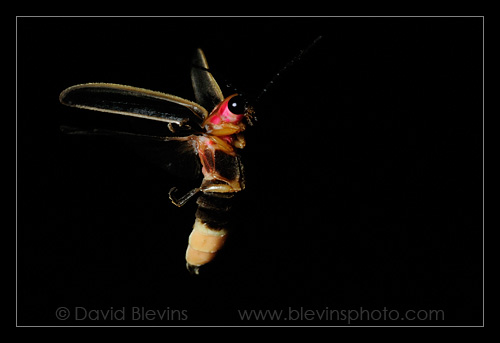
Common Eastern Firefly

This image was made with a small aperture for maximum depth of field to increase the chance of capturing an image in focus. The firefly's lantern was not bright enough to show up with such a small lens aperture, only the light from the camera flash registers in this image.

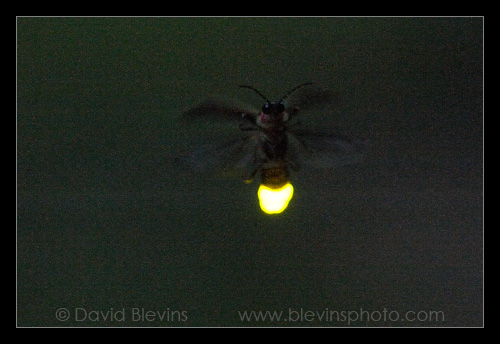
Common Eastern Firefly

This image was made with no camera flash, just the dim ambient light of dusk. The high ISO required to achieve a fast shutter speed to freeze the motion of a fast flying insect rendered noisy images and overexposed the firefly's light.

I eventually arrived at the best settings to balance these two approaches, with just enough sensitivity to render the firefly’s light as the brightest part of the image, and just enough light from the camera flash to capture the details of the firefly. I eventually settled on an aperture of f/16, a shutter speed of 1/250th of a second, and an ISO of 1600. I set the flash to minimum power and held it 10 to 12 inches from the subject.

After several evenings of really getting into this I found myself dancing around my yard in big dipper patterns with my flash going off just as I moved up sharply, just like a firefly. I suddenly became self conscious and hoped the neighbors were not becoming concerned, I am sure I looked ridiculous.

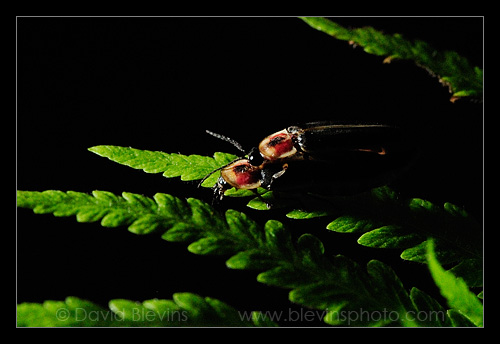
By the fifth evening I finally had the technique down, but even with all the practice it still took a lot of luck and most exposures were out of focus or otherwise unusable. I also discovered I was not the only one that got lucky that night…

Common eastern fireflies mating

Common eastern fireflies mating

Wild North Carolina Outtakes: Palamedes Swallowtail

UNC Press Spring 2011 Catalog

UNC Press Spring 2011 Catalog

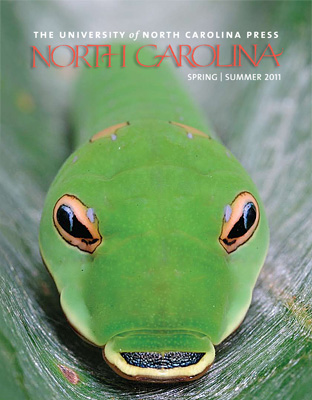
The cover of the spring 2011 catalog of new books from UNC Press features a photograph from Wild North Carolina of a palamedes swallowtail caterpillar preparing to pupate on a red bay leaf.

These are common butterflies in pocosins or other areas that have their favorite host plants. The caterpillars feed only on plants in the laurel family. In North Carolina that means mostly red bay (Persea borbonia) but could also include swamp bay (Persea palustris) and possibly sassafras (Sassafras albidum).

The caterpillars eat red bay leaves almost exclusively and even wrap themselves inside red bay leaves for protection when they are ready to pupate. The photograph shows a caterpillar as it begins to use silk to curl a red bay leaf around itself.

Although this is one of the most common butterflies in the coastal plain of North Carolina, it is threatened by an introduced disease that is killing its host plant. Red bay wilt disease is caused by an introduced fungus and beetle from Asia first detected in Georgia in 2002. The beetle and fungus have since spread into Florida and South Carolina.

I wanted to include a photograph of one of these caterpillars in the chapter on pocosins to make these connections, but finding a caterpillar in the wild is not easy. I was in an area of Juniper Creek near the Green Swamp with plenty of red bay trees but I had no idea how I was going to find a caterpillar. Then I saw an adult fly by as if it had some place important to go, so I followed it. I could not keep up in the thick vegetation and soon lost sight of it. Then another flew by heading in the same direction so I followed it until I lost it. A third came and I followed it a little further when I saw it land on a particularly healthy and sunlit red bay tree. It danced around the leaves as I approached and I guessed it might be laying eggs. I decided this was as good a tree as any to search for caterpillars. I looked for about 10 minutes, carefully examining one leaf after another, until I noticed one backlit leaf with a caterpillar silhouette showing through. I looked on the other side of the leaf and there it was; a full grown caterpillar almost ready to pupate!

These caterpillars have a pattern on their backs that looks like a face, to fool predators I presume. I decided on a perspective that maximized the face illusion and went to work setting up the camera. There are two spots on the back that look like eyes and a hard plate covering the head that looks like a mouth. One thing I always pay attention to when photographing animals, especially animals with dark eyes, is the reflection on the eye. Without a reflection a dark eye can look like a black hole. As I looked through the camera I noticed the wonderful reflections on the eyes but then I realized these are not really eyes and these reflections don’t change as I move the camera! That is when it hit me just how amazing this face illusion is! Those are not reflections at all; it is part of the pattern designed to look like the reflection on an eye! For a moment I forgot about taking photographs and just marveled at the incomprehensible perfection of this tiny miracle.

Wild North Carolina Outtakes: Carolina Dark-eyed Junco

I’ve been very busy lately putting the finishing touches on the new book. What little time I have had for photography has all gone into improving images for the book or creating images we realized we needed as the last details came together. The book content is all wrapped up now and it looks like everything is on schedule for spring 2011 publication. We also have a title, Wild North Carolina: Discovering the Wonders of our State’s Natural Communities.

Animals are an important part of natural communities but including them in the book was a challenge. Not just because they are difficult to photograph but because they tend to move around the landscape, making it difficult to associate an animal with a specific natural community.

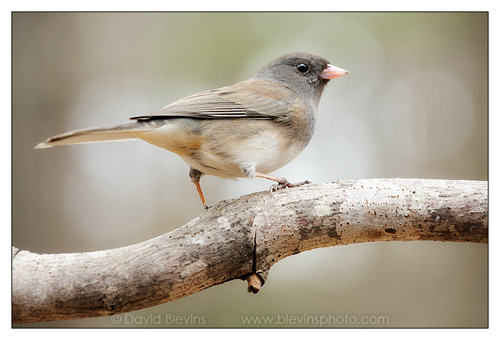
At first glance the Dark-eyed Junco might seem like an unlikely candidate for including in the book. Juncos are common birds seen across North Carolina in winter. They migrate here from their breeding grounds in New England and Canada and can be found in many different natural communities as well as lawns and at feeders.

Dark-eyed Junco

A dark-eyed junco that frequented my feeder last winter.


But there is a subspecies of Junco called Junco hyemalis carolinensis that breeds in the high mountains of the Southern Appalachians and does not migrate like the more commonly seen juncos from the north.


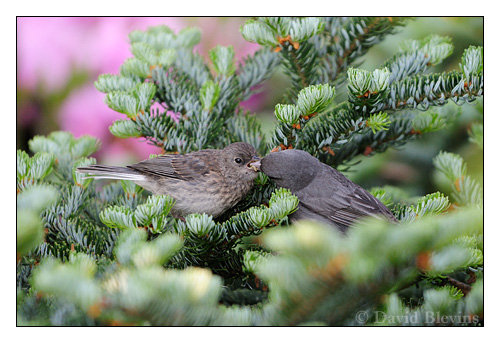
Adult Carolina Junco feeding a fledgling in the Roan Highlands.

Adult Carolina Junco feeding a fledgling in the Roan Highlands.

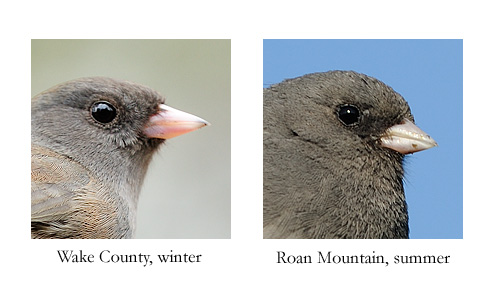
The Carolina Junco breeds in the spruce-fir forests on top of high mountains and migrates down slope for winter.  Carolina juncos are the only juncos here in the summer, but you can distinguish them from their northern relatives in winter by their stouter white bill.

Bill differences between juncos that migrate to North Carolina for winter and those that breed in the high mountains of North Carolina.

Bill differences between juncos that migrate to North Carolina for winter and those that breed in the high mountains of North Carolina.


Nuthatch Couple

A few days ago I spent a morning at the top of a 20 foot ladder photographing a brown-headed nuthatch couple building a nest. I made about 200 photographs trying to catch those moments that tell their story.

Brown-headed Nuthatch Pair

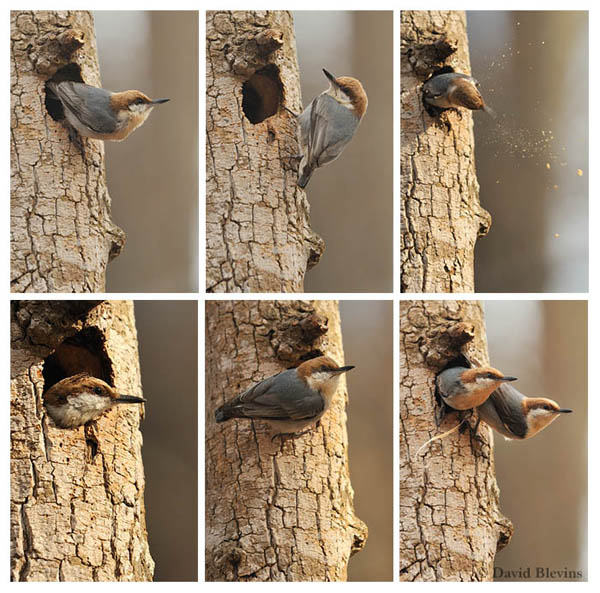
Brown-headed Nuthatch Series.

Clouds softened the early morning light for the first two images in the series above. I concentrated at first just on capturing a typical nuthatch pose next to the nest cavity. After a while the clouds parted and direct sunlight fell on the nest. The brighter light allowed me to use faster shutter speeds so I could capture some of the action. Instead of just dropping wood chips out of the hole, one of the birds would carefully perch at the opening and flip its head several times back and forth in a complete circle flinging the wood chips in every direction. It was very funny to watch but almost impossible to catch in a photo because it all happened so fast. At one point one of the birds took a break from excavating the cavity to just take in the morning, and perhaps to wonder what that human was doing on the ladder. This image made me laugh because the feathers on top of the birds head were all messed up from the work it had been doing down at the bottom of the cavity.

A little later some high thin clouds diffused the harsh sunlight and provided the perfect amount of contrast. It was bright enough to use the base ISO on my camera and still have enough shutter speed to avoid motion blur.

Brown-headed Nuthatch Pair

Brown-headed Nuthatch Pair

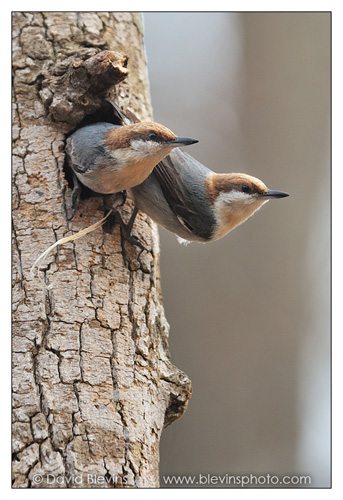
Finally, everything came together. While one of the birds was excavating the cavity, the other one was stuffing it with dried grass. It seemed to me that it would be better to wait until the excavation was finished before bringing in the grass but no relationship is without its challenges. Anyway, at one point the removal of wood chips and the bringing of dried grass coincided so that both birds were at the nest hole at the same time. At this moment the light was perfect, bright, diffuse, and warm, and I was ready.

North Carolina Piedmont Prairies

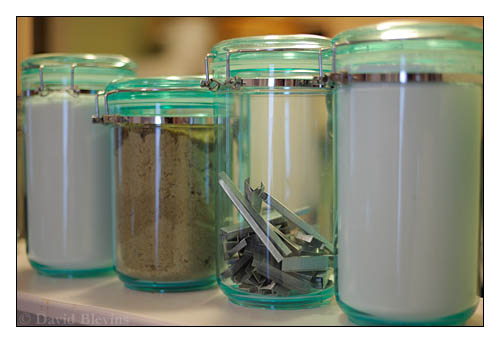
I recently returned from a trip to photograph some of the remnant prairies near Charlotte, North Carolina. My sister lives in Charlotte so I got to spend some time with her as well. She has these canisters on a shelf between her kitchen and living room with things like sugar, flour, salt, you know, the staples. I have been telling her for years it would be hilarious if one of the canisters had actual staples in it. Then she could watch the faces of her guests as they tried to figure out why office supplies were mixed in with the food. Well, she finally did it and was waiting for me to arrive so she could see how long it would take me to notice. I did not notice at first. I walked in the door, hugged her neck, and then, about 20 seconds later, I noticed it and burst out laughing! See, I was right, it is hilarious!

"Staples"

"Staples"

Anyway, back to the prairies. It seems strange to think about prairies in North Carolina. Today they are all but gone yet early explorers reported extensive prairies in the North Carolina Piedmont. Most of the evidence suggests these prairies were created and maintained by Native Americans. Many of the plants and animals that depended on the open conditions of the prairies now struggle to survive or are gone. I chose this time to visit because one of these plants, the federally endangered Schweinitz’s Sunflower, was at its peak flowering.

Schweinitz's Sunflower

Schweinitz's Sunflower

 One of the sites I visited was Mineral Springs Barren, a Plant Conservation Preserve whose purpose is to improve the habitat for the Schweinitz’s Sunflower. The few remnant prairies like this one are faint reminders of what once was, but from certain angles and perspectives, and with some imagination, I could see the open fields and bison that once characterized this area.

Mineral Springs Barren

Mineral Springs Barren

Meditation on a Cypress Stump

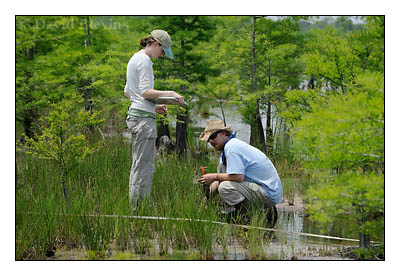
A few weeks ago I visited New Lake in Hyde County North Carolina with the Carolina Vegetation Survey. We were looking for natural lake shore vegetation, a type of natural community that grows along these shallow bay lakes. No one in our group had been to this lake before so we hoped the community was in good condition. I had seen natural lake shore vegetation at other lakes and they can be quite lovely, large cypress trees marching out into a shallow lake with grasses swaying in the waves. We were disappointed to discover that the cypress trees had been cut long ago. Weathered stumps marked the places where ancient trees once stood. A new forest of young cypress now lined the lake shore.

If I had been alone I might have turned around and gone somewhere else, but the team I was with decided the rest of the vegetation was in good enough condition to sample so we decided to stay the rest of the day.

Carolina Vegetation Survey

Carolina Vegetation Survey

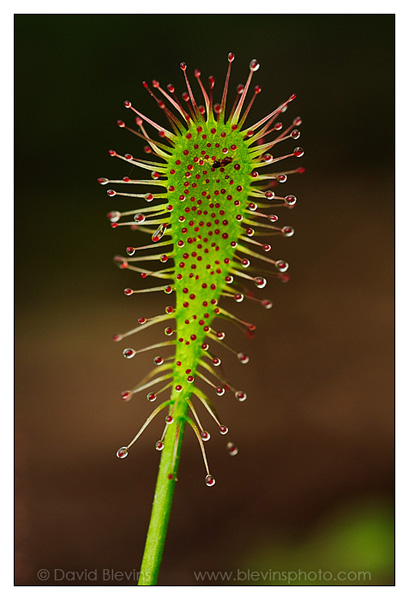
The trees I had hoped for were gone and the light was too harsh for landscapes. After a few minutes of dreary thoughts that were not producing photographs I decided I should see what sort of macro subjects I could find. It did not take long to discover tiny sundew plants growing in the shade of the young cypress trees.

Water Sundew

Water Sundew

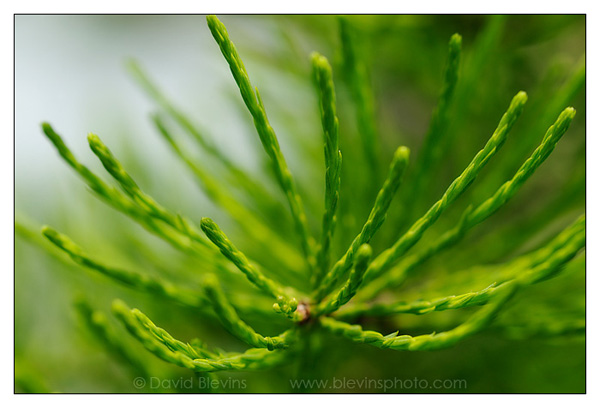
 One advantage of young trees is the foliage is easy to reach. These trees were mostly pond-cypress, very similar to the better known bald-cypress but the foliage is more like a rope than a feather and it points up from the stem rather than out.

Pond Cypress Foliage

Pond Cypress Foliage

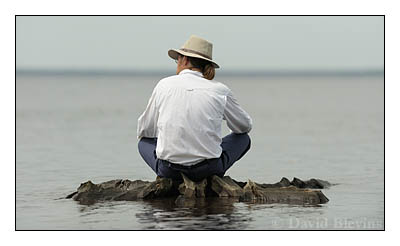
 After making the pond-cypress foliage photo I was out of ideas so I decided to sit quietly and observe until an idea was revealed to me. There was just one problem, there was no where to sit. The ground went from damp to soggy to shallow lake. The only dry place I could see to sit was the old cypress stumps along the lake shore. Most were weathered into very uncomfortable shapes, but after searching I found one with a very nice dry top that fit my bottom quite nicely.

Meditation on a Cypress Stump

Meditation on a Cypress Stump

My photography process has a lot in common with meditation. I sit quietly without thinking and just let the images I see wash over me. I try not to judge or think, I simply observe. After a time an idea for a photograph is usually revealed, provided I can remain open enough to see it.

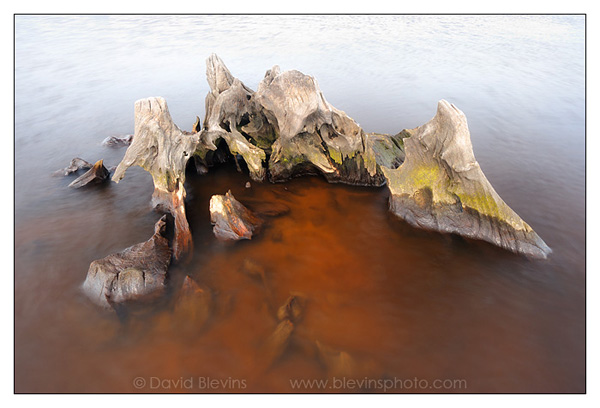
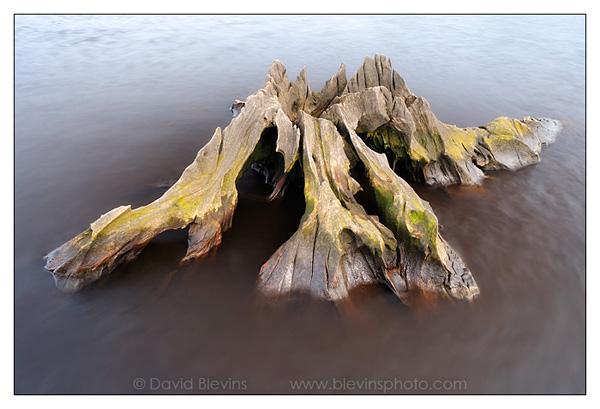
After sitting there for a time I realized the images of all the stumps I had searched while looking for a place to sit were running through my mind. When I first arrived at the lake I looked at them in a negative way, they represented the loss of something great that once existed. But now I was seeing them without judgment, just the physical objects detached from their meaning. Each was different, weathered, and spectacular in its own way. The Universe had spoken, I needed to photograph the weathered cypress stumps!

Weathered Cypress Stump #1

Weathered Cypress Stump #1

Weathered Cypress Stump #2

Weathered Cypress Stump #2

Wedding Photography

I photographed my brother’s wedding a few weeks ago. Wedding photography requires a very different process from my usual work. You have one chance to capture a significant meaningful moment, and then it is gone. I am used to being able to work on an image as long as it takes to get it right. To mentally prepare for the wedding, I had to keep telling myself that the moment and the emotions were most important and that the more technical aspects of the images would just have to fall where they may. I am happy with the results, but I told Linda (the bride) that I could not take all the credit. I had some lovely subjects to work with, and Jason (the groom) cleaned up pretty well too.

Linda was ready for the ceremony with about 15 minutes to spare so I asked if I could set up my lights and do a quick formal portrait. I wanted to get an image of Linda before the ceremony but after she was ready. With all the hectic preparations before the ceremony and the celebrations after, this was my only chance to have a calm moment with her. I showed her where to stand and asked her to wait while I worked out the lighting ratio. After a few tries I had the lighting worked out, but then I realized she did not need any direction. She was waiting for me to finish with the lighting, and she had just the look I wanted to capture of her waiting for the ceremony to start. This was her moment. She was perfect.

I made a few more compositions, and then it was time for the ceremony to start. While I was photographing the wedding party getting their act together, I saw Linda peeking out of her dressing room to see if it was time for her. I had only a few seconds to make the image before she disappeared back into the dressing room.

Photography was not allowed in the sanctuary during the ceremony so this was my last image before assuming my position on the second floor.

I could not see faces or emotions very well from the perch where I was allowed to photograph the ceremony, but I did have an excellent vantage point to show the entire spectacle.

After the ceremony, the wedding party rode to the reception in a trolley. It was a rainy day so while we were outside the light was spectacular. The rain did not dampen any spirits, and the raindrops on the window of the trolley were beautiful.

When we arrived at the reception, all of the bride’s maids ran to the building to get out of the rain, and there was no one left to help Linda get her dress out of the trolley. Jason was still on board chatting with the driver, oblivious to Linda’s plight. I was in position hoping to get a romantic image of Jason helping Linda out of the trolley or at least the bride’s maids giving Linda a hand. While I watched Linda struggle I thought maybe I should help her, but before I could she took matters into her own hands. I love the look on her face as she realizes it is all up to her.

Photographing the reception was a lot of fun. The ceilings were suitable for bouncing flash, although it was challenging to balance the flash exposure with the ambient light because the room was so dark. I also had to filter the flash to match the color of the incandescent lights. My favorite images from the reception are of the bouquet toss. It just worked; I could not have photographed it any better if I tried.

Instead of throwing rice someone had the brilliant idea to have the bride and groom exit through a cordon of guests wielding sparklers. It probably sounded cheerful and colorful, but these were the biggest fire shooting sparklers I have ever seen. I was actually concerned someone might catch on fire.

Best wishes you two! And welcome to the family, Linda. It is wonderful to have a new sister.

Bloodroot

It is so refreshing to see the first of the spring ephemerals emerge after a long winter, especially now with so many people caught up in the world’s economic troubles. They are reminders of the inexorable forces that create life and drive it forward. Forces that are far greater than anything we create.

Just after dawn I came upon a newly emerged bloodroot flower. Drops of rain still clung to the delicate unopened petals. Light shone through, and I could just make out the shape and color of the bright yellow stamens waiting inside.

Bloodroot

Bloodroot

Ayurveda Photography

I recently did some graphic design, photography, and web site development for my massage therapist. I don’t usually stray too far from nature photography on this blog, but I doubt I would be doing any photography today without Gin’s help.

Gin Brunssen

Gin Brunssen

I was pretty much out of commission for several months in early 2007, and I did not understand why. My doctor had no idea what was causing the pain and the various drugs he prescribed had side effects that were almost as bad as the pain. After months of this, I was not any closer to understanding what was going on, and things were not getting any better.

I knew I had a slight abnormal curvature in my spine in the vicinity of the pain so I thought a chiropractor might have some ideas. I found a great chiropractor, Dr. Hedgepeth, who could tell right away that the muscles in my lower back were in severe spasm. My doctor had never checked that! It’s not really his fault though, at the time I was not very aware of my body so I could not describe my symptoms accurately. I decided to look for a massage therapist to help me with the muscle spasms and that is when I found Gin.

Gin is very knowledgeable and skilled in a variety of massage techniques, and she has a rare ability to communicate her expert knowledge in a language that anyone can understand. There is just something healing about her. Gin not only relieved the pain from the muscle spasms, she also helped me become more aware of my body so I could better recognize the early symptoms of the muscle spasms and take appropriate steps to minimize them. Gin’s ability to communicate really helped me understand how my behavior was contributing to the problem as well as what I could do to improve my situation.

Gin recently started her own Ayurvedic massage business but she continues to do neuromuscular massage therapy as well. Check out the web site I designed for her if you would like to learn more about this ancient natural healing system.

Making the photographs for her web site was an interesting challenge. The treatments inspire some unusual images. The shirodhara treatment involves pouring warm oil over the forehead. This is a profoundly relaxing treatment, but finding a composition that conveys that feeling was difficult. I eventually settled on this very symmetrical composition.

Shirodhara

Shirodhara

There is obvious left/right symmetry, but there is also top/bottom symmetry in the dark shapes of the oil pot and hair. I think this symmetry helps give a sense of calm and balance that is hopefully picked up by the viewer.

The gandharva treatment uses a crystal singing bowl for sound therapy. The sound this thing makes has to be heard to be believed. You don’t just hear it; you feel it with your whole body.

Gandharva

Crystal Singing Bowl

I could not think of a way to photograph sound so instead I simply showed the bowl in use. This was the only shot that I did not have to light. The light from a window created just the right amount of depth and contrast.

I struggled with the meditation photograph. I tried several times to come up with something using several different models but was not happy with the results. On my third try, Gin modeled for me. I tried a number of different compositions against a red background similar to the photograph above, but I felt something was missing from those. Then, for some reason, I decided to shoot into the main light source (a window).

Meditation

Meditation

At the time I did not know what led me to do this but after giving it some thought I think I understand it. This is not just the hand of a person meditating, this is Gin’s hand. Her hands hold special significance for me because they saved me from months of pain. This light gives her hand an angelic quality. It conveys, at least to me, some of the awe and admiration I feel for her skills and her healing spirit.

Florida Birds

I recently returned from a bird photography trip to the east coast of Florida. I spent most of the time at the Merritt Island National Wildlife Refuge just north of Cape Canaveral and the Kennedy Space Center. This is a huge undeveloped area teaming with wildlife.

Salt Marsh and Palm Hammock

Salt Marsh and Palm Hammock

 Well, you can’t see any animals in that picture but trust me, they are in there!

My friend Lee invited me to join him on his trip to the Space Coast Birding Festival. I used to work with Lee in forestry at NCSU before he retired. Lee has more money than most people I know, yet uses coupons to save ¢50 on a hamburger. This works out well since I have less money than most people I know, and I could not afford to hang out with him if he lived closer to his means. On the drive down he suggested we split a $5 foot long subway sandwich. Lunch for $2.50, even I can afford that!

Each day Lee went on one of the festivals birding tours, and he let me borrow his Saab. The weather was perfect, and I had good luck finding and photographing animals.

I had a great time photographing the large wading birds. Each species has a different personality, resulting in behavior that I find visually inspiring. I can really identify with the little blue heron. They hunt just like I make wildlife photographs. They wait patiently, methodically, hardly moving until the time is right.

Little Blue Heron

Little Blue Heron

You get a sense of the bird’s patient stillness in this photograph. I had to wait for it to move a little to create the circular ripples in the water.

The reddish egret looks similar to the little blue heron but has a completely different hunting style. This bird chases fish by running at full speed through shallow water, sometimes flapping its wings and spinning around. This reminds some people of drunken staggering, but I think it looks more like unbridled enthusiasm.

Reddish Egret

Reddish Egret

You can get a sense of how fast this bird is running from the forward leaning posture and the wake it is leaving in the water.

The green heron is a much smaller bird and likes to hunt from a branch over the water, especially when the water is too deep to stand in.

Green Heron

Green Heron

You can’t see its long neck in this photograph because it is coiled up preparing to strike. Just seconds after I made this photograph, it caught the fish it was watching and flew away.

I also had an interesting interaction with an anhinga. These birds swim under the water and spear fish with their sharp bill. They often swim with just their head and neck visible, the rest of their body submerged. This behavior gave them one of their common names, “snake bird”. I was surprised to see this one swimming toward me. It made for a very elegant composition to illustrate this type of swimming behavior.

Anhinga

Anhinga

After I made the photograph it just kept swimming toward me until it climbed up on the bank just a few feet from where I was sitting. I could not figure out why he was being so friendly until I noticed what was swimming right behind him.

American alligator

American alligator

I guess the anhinga felt safer on the shore with me than in the water with the alligator. After the alligator swam away, the anhinga started drying his wings.

Anhinga Drying its Wings

Anhinga Drying its Wings

A woman was nearby explaining to her daughter how these birds are not very well adapted to their environment because they have to dry their wings after swimming. I am always glad to see parents teaching their children about nature but it irks me when they just make stuff up. These birds are perfectly adapted to their environment! By absorbing water they become less buoyant and can stay under water without effort. Most birds that dive trap air under their waterproof feathers and have to constantly expend energy to stay under. As soon as they stop swimming they pop up to the surface like a cork. The anhinga can stay under without effort as it chases fish; the only downside is it can’t fly until it dries out a bit.

On the last day of the trip Lee and I planned to spend a few hours at dawn in the wildlife refuge before driving back to North Carolina. We were late getting out to the refuge because Lee discovered the hotel had slightly overcharged him. By the time he got that straightened out the sun was already up. This turned out to be a good thing. For the past three days I had driven past a marsh with palm hammocks on my way to the refuge. This is the same place pictured in sunset light in the first photograph. The light before dawn at this location was not interesting the previous three days. But this time the sun was up as we drove by the marsh and the light shining through the early morning fog was spectacular.

Sunrise over a Palm Hammock

Sunrise over a Palm Hammock

We spent a few more hours in the refuge and then headed back to North Carolina; on the way we shared another $5 foot long subway sandwich.